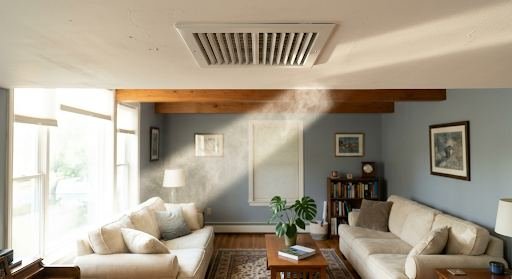
Weird Smell from Vents: What It Could Mean
Quick Facts
- Musty smell?
- Mold/mildew on coil or clogged drain — not urgent
- Burning/electrical smell?
- Shut off now and call — unless it's brief startup dust
- Rotten egg smell?
- Possible gas leak — evacuate and call your gas utility
- Can you DIY it?
- Musty smells often yes (cleaning/drain clearing) — others need a pro
A smell coming from your vents is really a report on something happening somewhere upstream in the system — the vent itself is just where the air, and whatever it's carrying, reaches you. Different smells point to genuinely different causes and different levels of urgency, so identifying which one you're dealing with matters more than just noticing "something smells off."
Musty or Dirty-Sock Smell
This is the most common HVAC odor complaint and almost always points to mold or mildew growing somewhere moisture accumulates — typically the evaporator coil or a clogged condensate drain line. The coil that cools your air runs cold enough to pull moisture out of it, which normally drips into a pan and drains away; when that drain slows or clogs, standing water sits in a dark, damp space, exactly the environment mold favors. This isn't usually dangerous, but it does affect indoor air quality and is worth addressing with a professional cleaning and drain-line clearing rather than living with indefinitely.
Burning or Electrical Smell
This is the one that should get the system shut off now, with one narrow exception. If you're running the heat for the first time after months of disuse, a brief burning smell from dust burning off the heat exchanger or heating elements is normal and should fade within a few minutes. A burning smell that persists, or one with a sharp, plastic, or electrical character, points to an overheating motor, damaged wiring, or a failing circuit board — turn the system off and call a technician rather than waiting to see if it stops.
Rotten Egg Smell
Air conditioners don't run on natural gas, but AC and furnace systems typically share the same blower and ductwork, so a gas leak involving the furnace's gas line can show up as a rotten-egg smell from the vents even when the AC, not the furnace, is what's currently running. If you notice this, turn off the system, open windows, leave the house, and call your gas utility — the same urgency as a gas smell anywhere else, since the shared ductwork doesn't make it any less serious.
Exhaust or Car-Like Smell
A smell resembling car exhaust suggests a refrigerant leak. Beyond reduced cooling performance, prolonged exposure carries real health risk, so this calls for powering down the system and calling for repair rather than continuing to run it while you wait.
Chemical or Paint-Like Smell
If your air handler or return duct is located in or near a garage, nearby vehicle exhaust, paint, cleaning products, or adhesives can get drawn into the system and circulated through the vents — not a fault of the HVAC system itself, but worth addressing by checking what's stored near the intake rather than assuming the equipment is failing.
Sewage-Like Smell
If ductwork runs near plumbing that has its own problem — a dry trap, a vent stack issue, or worse — that odor can travel through shared wall cavities or proximity and seem like it's coming from the vents when the real source is plumbing. Our sewage smell guide covers that cause specifically if this seems like the better match for what you're noticing.
Testing Whether It's Actually the HVAC System
Turn the system off entirely for a few minutes and see if the smell fades or if it's present regardless of whether air is moving. A smell that only shows up while the blower runs points more clearly back to something inside the system (the coil, the ducts, the equipment itself); one that lingers with the system off suggests the actual source is in the room or nearby, and the HVAC system is just moving already-present air around rather than generating the smell itself.
The Simple Rule for Sorting Urgency
Musty means moisture and biology — address it, but it's not urgent. Burning, electrical, or rotten-egg smells mean heat, electricity, or gas — shut the system off and call now. Chemical or sewage-like smells usually mean the HVAC system is just the messenger for a problem located somewhere else entirely.
Sources: Trane, San Antonio Heating & Cooling.
| Smell | Likely cause | Urgency |
|---|---|---|
| Musty / dirty sock | Mold/mildew on coil or clogged condensate drain | Low — address, not urgent |
| Burning / electrical (persistent) | Overheating motor, wiring, or circuit board | High — shut off now |
| Rotten egg | Gas leak via shared ductwork | Emergency — evacuate |
| Car exhaust / chemical (from unit) | Refrigerant leak | High — shut off, call |
| Chemical (external source) | Nearby paint/products/vehicle exhaust drawn in | Low — not an HVAC fault |
This guide can help you sort a smell into the right urgency category, but it can't confirm the exact source without a technician physically inspecting the coil, drain line, wiring, or gas connections. Two different causes can smell similar enough to a person that a professional check is the only way to be certain.
Frequently Asked Questions
Is a musty smell from my vents dangerous?
Not typically an emergency, but it does affect indoor air quality over time and is worth having professionally cleaned rather than ignored indefinitely.
Why does my furnace smell like burning dust every fall?
This is usually normal — dust accumulates on the heat exchanger over the off-season and burns off the first time you run the heat again. It should fade within a few minutes; if it persists, that's different and worth investigating.
Can my AC produce a gas smell even though it doesn't use gas?
Yes, indirectly — AC and furnace systems typically share the same blower and ductwork, so a furnace gas leak can show up as a rotten-egg smell from vents even when only the AC is currently running.
Why does my basement HVAC system smell like the garage?
If the air handler or return duct is located near a garage, exhaust fumes, paint, or cleaning products stored nearby can get drawn into the system and circulated through the vents.
How do I know if a smell is coming from my HVAC system or from plumbing nearby?
If ductwork runs near a plumbing fixture with its own odor problem, the smell can seem to come from the vents when the real source is elsewhere — checking whether the smell is present with the HVAC system off can help distinguish the two.