Sewage Smell in the House: What It Means
Quick Facts
- Is this an emergency?
- Rarely — usually a quick fix, not urgent
- Most common cause
- A dry P-trap from an unused drain
- Quick fix
- Run water in unused drains for 30 seconds
- Can you DIY it?
- Yes for the common cause — vent/sewer line issues need a pro
A sewage or rotten-egg smell in the house is unpleasant but usually traces back to one of a small number of causes, and the most common one is also the easiest to fix. Working through them in order, starting with the simplest, resolves this more often than it seems like it should given how bad the smell can be.
Start With the Most Common Cause: A Dry P-Trap
Every drain has a curved section of pipe, the P-trap, that holds a small amount of water specifically to block sewer gas from rising up through the drain. If a sink, shower, floor drain, or other fixture hasn't been used in several weeks, that water can simply evaporate, especially in dry climates or low-humidity homes. The fix: run water in every infrequently used drain for about 30 seconds. This refills the trap and typically stops the smell within a few minutes to an hour as residual gas dissipates from the room.
Basements and Floor Drains
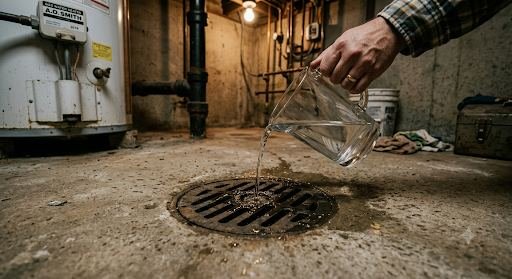
If the smell is strongest in a basement, a dry floor drain is almost always the cause, for the same reason — floor drains get used even less often than sink or shower drains and dry out more easily. Pour a quart or so of water directly down it and check back.
If Refilling the Trap Doesn't Fix It: Check for a Clogged Vent Stack
Vent pipes let air into the drain system so water flows smoothly and route sewer gases safely out through the roof. If a vent gets blocked by leaves, debris, or a bird's nest, gases have nowhere to go but back into the house, and the vacuum created can actually pull water out of P-traps throughout the home. Signs of a vent problem include a whole-house smell rather than one isolated to a single fixture, gurgling sounds when you flush or drain water, and multiple traps going dry repeatedly even with regular use. This requires roof access and is a job for a plumber, not a homeowner.
A More Serious Sign: Damaged Sewer Line
A cracked or damaged main sewer line can leak both odor and actual sewage into the soil around your home, with the smell seeping indoors through foundation cracks or gaps in the slab. Additional signs point toward this specifically: slow drains throughout the house rather than just one, visibly wet patches or unusually green grass along the path where the sewer line runs, or an actual backup rather than just an odor. This needs professional video inspection to diagnose accurately and is not a DIY-diagnosable situation.
What Not to Do
Don't pour bleach down the drain hoping to fix it — bleach doesn't address a dry trap, a blocked vent, or a damaged line, and it can damage pipes with repeated use while doing nothing about the actual cause. It may temporarily mask the smell or kill some bacteria, but the underlying issue remains exactly as it was.
Health Note
Sewer gas contains hydrogen sulfide, which is responsible for the rotten-egg character of the smell and can cause headaches and nausea with exposure. This is a good reason to address even an "just annoying" sewage smell reasonably promptly rather than living with it indefinitely, even when it isn't a true emergency.
Why New Homes Aren't Immune
It's tempting to assume this is only an old-house problem, but dry P-traps and clogged vents happen regardless of a home's age — any drain that goes unused long enough will eventually dry out, and any vent exposed to the elements can collect debris over time. A guest bathroom, a laundry room floor drain, or a rarely-used basement sink are just as likely to dry out in a newly built home as an older one; the fix and the cause are the same either way.
A Quick Way to Narrow It Down
Ask yourself when you last used the specific drain closest to where the smell is strongest — in the large majority of household sewage-smell cases, that single question and a quick trap-refill test explains and resolves the whole thing before you ever need to call anyone.
Sources: Oatey, Western Rooter & Plumbing.
| Pattern | Likely cause | Call a plumber? |
|---|---|---|
| Smell near one specific unused drain | Dry P-trap | No — run water in the drain first |
| Whole-house smell + gurgling when flushing | Clogged vent stack | Yes — needs roof access |
| Smell + slow drains + wet/green yard patches | Damaged sewer line | Yes — needs video inspection |
This guide can help you rule out the simple, common cause first — it can't confirm a vent blockage or sewer line damage without a physical inspection. If refilling every trap in the house doesn't resolve it, that's the signal to stop guessing and call.
Frequently Asked Questions
Why does my house smell like sewage only occasionally?
Intermittent smells often point to a P-trap that's borderline dry, or a vent partially blocked so gas only escapes under certain conditions — both are less severe versions of the same causes as a constant smell.
Will bleach get rid of a sewer gas smell?
No — it doesn't address a dry trap, a blocked vent, or a damaged line, and repeated use can actually damage pipes without fixing anything.
How do I know if the smell is coming from a floor drain in my basement?
Basement floor drains dry out more easily than sink or shower traps simply from being used less often — if the smell is strongest there, pour a quart of water down it as a first test.
Is sewer gas dangerous to breathe?
It contains hydrogen sulfide, which can cause headaches and nausea with exposure — not typically an acute emergency at household concentrations, but worth addressing rather than ignoring long-term.
What if I've refilled every trap and the smell is still there?
That points toward a clogged vent stack or, less commonly, a damaged sewer line — both need a plumber's inspection rather than further DIY troubleshooting.