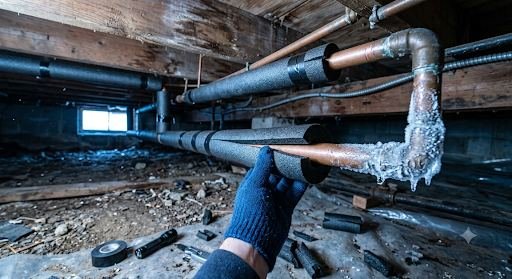
Frozen Pipes: Prevention & What to Do if One Bursts
Quick Facts
- Risk threshold
- Pipes at real risk below 20°F
- Best prevention
- Drip exposed-pipe faucets, keep thermostat steady
- If away from home
- Keep heat on, set no lower than 55°F
- Already frozen?
- Warm gently — never with an open flame
Frozen pipes cause real damage mainly because water expands as it freezes, and that pressure has to go somewhere — usually a split in the pipe wall you won't see until it's already flooding. Prevention is genuinely effective here, and it doesn't take much: a few habits during cold snaps catch most of the risk before it becomes a burst pipe.
The Temperature That Actually Matters
20°F is the number most commonly cited as the threshold where pipe freezing becomes a real risk, particularly for pipes in unheated or poorly insulated spaces — basements, crawl spaces, attics, garages, and exterior walls. Pipes in the interior of a well-heated home are much lower risk even well below freezing outside; it's the exposed and uninsulated runs that fail first, often the same ones every year if nothing changes.
Which Pipes in Your Home Are Actually at Risk
Not every pipe is equally vulnerable. The ones that matter most: any line running through an unheated garage, an uninsulated crawl space, an attic, or along an exterior wall with minimal insulation behind the drywall. Kitchen and bathroom sinks on exterior walls are common trouble spots specifically because the cabinet below acts as a barrier that traps cold air right against the supply lines.
Let the Right Faucets Drip
When temperatures are forecast below 20°F for several hours or more, let the faucets served by exposed pipes drip — both hot and cold, since either side can freeze independently. A slow, steady drip is enough; you're not trying to run a stream, just keep water moving so it's harder for it to sit still and freeze solid. Pick the faucet farthest from where your main line enters the house, so water moves through the most exposed length of pipe rather than just the last few feet.
Open the Cabinet Doors
Cabinets under sinks on exterior walls trap cold air around the pipes behind them. Opening the doors during a cold snap lets your home's heat actually reach those pipes instead of being blocked out — a small step that makes a real, measurable difference according to the American Red Cross's winter storm guidance. If there are cleaning products or anything hazardous stored under there, move them out of reach first if kids or pets are in the house.
Don't Let the Thermostat Drop at Night
A lower nighttime setting is a normal way to save on heating, but during a hard freeze it's worth suspending that temporarily and holding a consistent temperature day and night. If you're leaving town during cold weather, don't turn the heat off entirely — keep it set no lower than 55°F the whole time you're away, even though that costs more than shutting it off completely.
Insulate the Exposed Runs
Pipe insulation sleeves are inexpensive and a genuine one-time fix for the pipes most likely to freeze — anything running through a garage, crawl space, attic, or exterior wall. Combined with sealing obvious drafts near where pipes pass through exterior walls or the foundation, this addresses the actual exposure instead of reacting to it every single cold night for years.
The Real Cost of Doing Nothing
Water damage and freezing consistently rank among the most common and most expensive homeowner insurance claims, with average claims often running into five figures once flooring, drywall, and affected belongings are accounted for — not just the plumbing repair itself. A few dollars of pipe insulation and one habit during cold snaps is a small trade against that.
What Homeowners Insurance Actually Covers Here
Most standard policies treat a frozen-and-burst pipe as sudden, accidental water damage, which is typically covered — but the coverage usually applies to the water damage itself, not necessarily the cost of the plumbing repair that caused it, and definitely not to damage from a pipe that froze because the home was left unheated against the policy's own requirements to maintain reasonable temperature. Reading that specific clause in your policy before a cold snap, not after a claim gets denied, is worth the ten minutes.
Signs a Particular Room or Wall Is a Repeat Risk Zone
A few patterns are worth watching for: a specific faucet that runs noticeably colder or with lower pressure than others in the house, a room that's consistently colder than the rest of the home regardless of thermostat setting, or visible frost on the inside of an exterior wall during a hard freeze. Any of these point to a specific insulation gap or exposed run that a general prevention routine won't fully solve — that's a conversation for a plumber, not another season of hoping the drip faucet handles it.
Special Considerations for a Vacant or Vacation Home
An unoccupied home during winter carries extra risk simply because nobody's there to notice a problem developing. Beyond keeping the thermostat at 55°F or higher, it's worth having someone check on the property periodically during extended cold stretches, and worth considering a water leak sensor or smart shutoff system that can alert you remotely — the damage from a frozen pipe in a vacant home is often far worse by the time anyone notices, simply because water keeps flowing unnoticed for days rather than minutes.
If a Pipe Already Froze
A trickle instead of normal flow from a faucet is the first sign. If you catch it before it bursts, you can gently warm the exposed section with a hair dryer or warm towels, working from the faucet end toward the blockage — never with an open flame, which is a real fire risk against a pipe you can't fully see into behind a wall. If the pipe has already burst, the steps are the same as any burst pipe: shut off the main water valve immediately and call a plumber. Our burst pipe guide covers that situation step by step.
Sources: American Red Cross, Angi.
| Situation | What to do | Call a plumber? |
|---|---|---|
| Cold snap forecast, pipes not yet frozen | Drip exposed faucets, open cabinet doors, hold thermostat steady | No — prevention only |
| Faucet trickling instead of flowing | Gently warm the exposed section, never with an open flame | Not yet, unless it doesn't thaw within a few hours |
| Pipe already burst | Shut off the main valve immediately | Yes — immediately |
This guide covers general prevention that works for most homes, but it can't account for your specific plumbing layout, insulation quality, or how exposed your particular pipes are. If a pipe has frozen in the same spot more than once, that's a sign worth having a plumber actually look at — not just repeating the same drip-and-hope routine every winter.
Frequently Asked Questions
At what temperature do pipes freeze?
Water freezes at 32°F, but 20°F outside air temperature is the commonly cited threshold where exposed or poorly insulated pipes are at real risk, since indoor pipes are buffered by the home's heating.
Should I drip hot water, cold water, or both?
Both — either side can freeze, and dripping only one doesn't protect the other.
Does a dripping faucet waste a lot of water?
A slow, steady drip uses relatively little water compared to the cost of a burst pipe and the water damage that follows — it's a reasonable tradeoff during genuinely cold snaps, not something to run all winter regardless of temperature.
Can I use a hair dryer to thaw a frozen pipe?
Yes, applied gently from the faucet end toward the blockage. Never use an open flame — it's a real fire risk against a pipe you can't fully see into.
Why do cabinets under sinks matter for frozen pipes?
A closed cabinet on an exterior wall traps cold air right against the supply lines behind it. Opening the doors during a cold snap lets your home's ambient heat reach those pipes instead.
What if the same pipe keeps freezing every year?
That's a sign of a specific exposure or insulation gap worth having a plumber assess directly, rather than repeating the same prevention routine every winter with the same result.