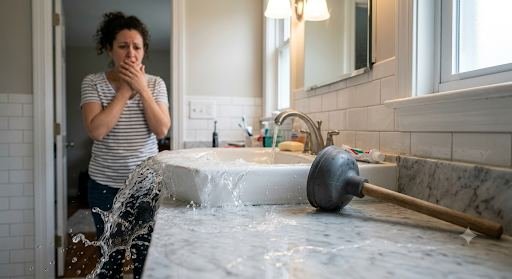
Clogged Drain Overflowing: When to Stop DIY and Call a Plumber
Quick Facts
- Is this an emergency?
- Usually not — unless multiple drains are affected
- First step
- Stop adding water, then plunge or snake
- Red flag
- Multiple drains backing up together = main line issue
- Can you DIY it?
- Often yes for a single-fixture clog
A clogged drain that's actively overflowing is usually manageable if you work through it in the right order: stop adding water, contain what's already out, then figure out whether this is a simple fixture clog or something bigger. Most single-drain clogs respond to basic tools. A specific set of signs tells you when to stop trying those tools and call a plumber instead.
Stop Adding Water First
If a drain is overflowing, resist the urge to keep running water hoping it'll eventually go down — more water just means more pressure and a bigger mess. Stop the source, then deal with what's already out with towels or a wet-vac before troubleshooting the actual clog.
Try a Plunger for a Single Fixture Clog
A cup plunger works for sinks, tubs, and standard clogs when only one fixture is affected. Create a tight seal over the drain opening, make sure the plunger cup is submerged in water, and use firm, sharp plunges rather than slow pushes. If there's an overflow hole in the sink or tub, plug it with a wet rag first so the pressure stays focused on the clog itself.
Try a Drain Snake if the Plunger Doesn't Clear It
A hand-crank drain snake reaches further than a plunger and physically breaks up or retrieves what a plunger can't dislodge. Feed it in gently, and if you feel resistance, rotate the snake rather than forcing it straight through — that's what actually breaks up the clog rather than just pushing it deeper.
Skip the Chemical Drain Cleaner
If you've already got standing water in the fixture, avoid pouring in a chemical drain cleaner — it can splash back on skin or eyes, and it doesn't help if you end up needing to plunge afterward, since that risks splashing the chemical around. A plunger or snake used first is both safer and, for most clogs, just as effective.
The Signs That Mean Stop and Call
A few specific signals mean this isn't a plunger-and-snake situation anymore:
- Multiple drains backing up at once — if your sink, tub, and toilet are all slow or overflowing together, the problem is very likely in the main sewer line, not any single fixture, and no amount of plunging one drain will fix that.
- Water rising in one fixture when you run a different one — for example, the tub filling when you run the washing machine — is a classic sign of a main line restriction.
- Gurgling sounds combined with a sewage smell — this points to a vent or main line issue, and standing water with a sewage odor specifically means stop working on it yourself and call.
- The clog keeps coming back in the same drain even after you've cleared it — recurring clogs usually mean something deeper: grease buildup, tree root intrusion, or a partially collapsed section of pipe that DIY tools can't reach or fix permanently.
What a Plumber Can Do That You Can't
Beyond a longer, motorized version of the same drain snake, plumbers use hydro-jetting — high-pressure water that clears grease and buildup a snake just pushes past — and camera inspection to actually see what's causing a recurring or main-line clog rather than guessing. For anything beyond a single fixture clog, these tools solve the actual problem instead of buying a few more weeks before it backs up again.
What Happens If You Keep Ignoring It
A slow drain that gets worked around rather than fixed tends to progress in a predictable direction: slow drainage becomes standing water, standing water becomes an overflow during heavier use, and a main line restriction left alone can eventually back up into the lowest drain in the house — often a basement floor drain or a downstairs bathroom — which is a meaningfully worse and more expensive situation than the original slow sink. Treating a persistent slow drain as informative rather than merely annoying avoids that progression.
Reading Where the Clog Actually Is
A clog affecting only the farthest fixture from your main line (an upstairs bathroom, say) is more likely local to that fixture's own drain. A clog affecting everything downstream of a certain point — several fixtures on the same floor, or the whole house — points toward a shared line rather than any single fixture. This distinction is exactly what a plumber's camera inspection confirms, but noticing the pattern yourself helps you describe the problem accurately on the call.
Preventing the Next One
Skip pouring grease down any drain — let it cool and throw it out instead. Use drain covers to catch hair before it accumulates in a P-trap. And if a specific drain slows down repeatedly, treat that as useful information rather than a coincidence — it's telling you exactly where the next real clog is going to form.
Sources: Total Dry Restoration, Connecticut Sewer & Drain.
| Situation | What it suggests | Call a plumber? |
|---|---|---|
| One sink or tub slow/clogged | Local fixture clog — hair, soap, food debris | Try plunger/snake first |
| Multiple fixtures backing up together | Main sewer line restriction | Yes — DIY tools won't fix this |
| Gurgling + sewage smell | Vent or main line issue | Yes — stop and call |
| Same drain clogs again and again | Grease buildup, roots, or pipe damage | Yes — needs camera inspection |
This guide covers what's genuinely safe and effective for a homeowner to try — it can't tell you whether your specific recurring clog is grease, roots, or a damaged pipe. That distinction needs a camera inspection, not another round of the same DIY tools that already didn't fully fix it.
Frequently Asked Questions
Why shouldn't I use a chemical drain cleaner if the drain is already overflowing?
If there's standing water, a chemical cleaner poured in risks splashing back, and it complicates plunging afterward if the cleaner hasn't fully worked. A plunger or snake tried first is safer.
What does it mean if water rises in the tub when I run the washing machine?
That's a classic sign of a main sewer line restriction — the fixtures are sharing a blocked path, not each independently clogged, and it needs a plumber rather than DIY tools.
Is a gurgling sound always serious?
Not always on its own, but combined with a sewage smell, it points to a vent or main line problem worth stopping and calling about rather than continuing to plunge.
Can hydro-jetting damage older pipes?
A licensed plumber assesses pipe condition before using hydro-jetting specifically because very old or already-damaged pipes need a gentler approach — this is part of why it's a professional tool, not a DIY rental.
Why does the same drain keep clogging even after I clear it?
Recurring clogs in the same spot usually mean the underlying cause — grease buildup, tree roots, or a partially collapsed pipe section — was never actually removed, just pushed past temporarily.