Low Water Pressure Suddenly: Common Causes
Quick Facts
- Normal PSI range
- 45–60 PSI — below 40 is considered low
- First step
- Check if it's one fixture or the whole house
- Quick check
- Confirm main and meter valves are fully open
- Can you DIY it?
- Valve checks yes — PRV/leak diagnosis needs a plumber
Normal residential water pressure runs 45 to 60 PSI; anything below 40 PSI is considered low and noticeably affects showers, dishwashing, and how quickly toilets and washing machines fill. A sudden drop, rather than a gradual one, usually has a specific and findable cause — and whether it's isolated to one fixture or affects the whole house is the fastest way to narrow it down.
First: Isolated to One Fixture, or Whole House?
Check pressure at a few different fixtures. If only one faucet or shower is affected, the problem is local — likely a clogged aerator, a partially closed fixture shutoff valve, or a blockage in the specific line feeding that fixture. If the whole house is affected, look upstream: the main shutoff valve, a pressure regulator, or the municipal supply itself.
Check the Main and Meter Valves First
A whole-house drop right after any recent plumbing work, a utility visit, or even routine yard work near the meter is often just a valve that didn't get fully reopened. Locate the main shutoff (often near the water heater or where the line enters the house) and the meter valve, and confirm both are turned fully counterclockwise to open.
A Failing Pressure-Reducing Valve (PRV)
Many homes have a PRV that regulates incoming municipal pressure down to a safe level for household plumbing. When it fails, pressure typically declines gradually rather than instantly, and is often accompanied by a noticeable whooshing sound from the valve itself, usually in a basement or utility area. A failing PRV needs professional replacement rather than a DIY fix.
Sediment in the Water Heater (Hot Water Only)
If cold water pressure is normal but hot water specifically runs weak, the water heater itself is the likely cause — sediment accumulating in the tank restricts flow. Flushing the tank sometimes helps; if buildup is severe, it may point toward replacement rather than a simple flush being enough.
Hidden Leaks
A leak anywhere in the supply lines, even a small one, reduces pressure available at every fixture, since water is escaping somewhere before it ever reaches a faucet. Leaks can stem from corrosion, prior freeze damage, or physical damage to a pipe, and often aren't visible if they're behind a wall or under a slab — a plumber can pressure-test the system to confirm one exists even without visible water.
Older Pipes and Municipal Supply Issues
Homes over about 20 years old with galvanized steel or old Orangeburg-style pipe are prone to internal mineral buildup narrowing the effective diameter of the pipe over years, or, for Orangeburg specifically, root intrusion through the porous pipe material. Separately, if neighbors report the same sudden drop, the cause is likely the municipal supply itself — worth a quick check before assuming the problem is inside your own plumbing.
Well Systems: A Different Set of Causes
If your home is on a private well rather than municipal water, sudden low pressure more often points to the well pump or the pressure tank rather than anything covered above. This needs a well-system technician specifically, since the equipment and diagnostic approach differ from municipal-supply plumbing.
Why Sudden Matters More Than You'd Think
A gradual decline over months is often just mineral buildup slowly narrowing pipes with age — annoying, but low urgency. A genuinely sudden drop, especially overnight or within a day, points more specifically toward something that changed abruptly: a valve position, a new leak, or a component failure rather than years of slow wear. That distinction is worth mentioning when you describe the problem, since it meaningfully narrows what a plumber checks first.
When to Call a Plumber
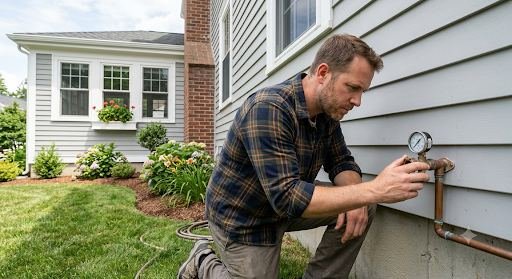
A valve check you can do yourself in a few minutes. A suspected PRV failure, a hidden leak, or older pipe deterioration all need a professional — a plumber can attach a pressure gauge to confirm the actual PSI reading and narrow down the cause with more certainty than guessing from symptoms alone.
Sources: Berico, Quality Plumbing.
| Pattern | Likely cause | Call a plumber? |
|---|---|---|
| One fixture only | Clogged aerator or local shutoff valve | Try DIY cleaning first |
| Whole house, after recent work nearby | Partially closed main/meter valve | Check yourself first |
| Whole house, gradual decline + whooshing sound | Failing pressure-reducing valve | Yes |
| Hot water only | Sediment in water heater tank | Try flushing, then call if unresolved |
| Neighbors report the same issue | Municipal supply problem | Call the utility, not a plumber |
This guide can help you narrow down the likely cause, but it can't confirm a hidden leak or measure your actual PSI without equipment. A plumber's pressure gauge reading is the difference between a good guess and a confirmed diagnosis.
Frequently Asked Questions
What PSI is considered normal for a house?
Most homes function best between 45 and 60 PSI. Below 40 PSI is considered low and will noticeably affect showers, dishwashing, and appliance fill times.
Can a water heater cause low pressure throughout the whole house?
Not usually — a water heater issue typically affects hot water pressure specifically, while cold water stays normal. Whole-house low pressure points elsewhere.
Why would low water pressure happen right after a plumber or utility visit?
A valve not fully reopened after work is a common and simple cause — checking the main and meter valves is worth doing before assuming anything more serious.
Is low water pressure ever a sign of a bigger problem?
Yes — a hidden leak or advancing pipe corrosion can show up first as gradually declining pressure before becoming a more obvious problem like a burst pipe.
How is a well system different for this problem?
Low pressure on a well system usually points to the pump or pressure tank rather than the causes that apply to municipal supply, and needs a well-system technician rather than a standard plumber.