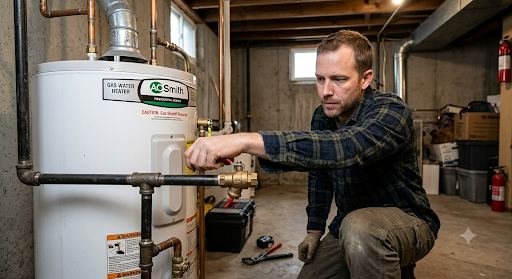
Gas Smell Near a Water Heater: Safety Steps First
Quick Facts
- Strong smell?
- Evacuate immediately, call from outside — no switches, no flames
- Faint smell?
- Turn off gas valve, ventilate, call before reusing
- Not always gas
- Sulfur bacteria + anode rod can smell similar when running hot water
- Can you DIY it?
- No — never relight or repair after smelling gas
Natural gas is odorless on its own; a chemical called mercaptan is deliberately added so leaks are noticeable, producing the rotten-egg smell most people associate with a gas leak. Near a water heater, that smell can mean several different things, ranging from completely normal to a genuine emergency — and the very first thing to figure out is which one you're dealing with, since the response is completely different depending on the answer.
If the Smell Is Strong: Act Now, Don't Investigate
Evacuate everyone, including pets, immediately. Do not flip any light switches, use a phone inside, or create any spark on your way out — electrical switches specifically can ignite accumulated gas. Get to a safe distance, commonly cited as at least 350 feet from the house, and call your gas utility or 911 from there, not from inside or right next to the home.
If the Smell Is Faint: Proceed Cautiously
A faint smell allows a bit more room to investigate before evacuating outright. Turn off the gas control valve on the water heater itself — typically a lever or knob on the gas line feeding the unit, turned perpendicular to the pipe to shut it. Open windows and doors to ventilate. Then call a licensed plumber or your gas utility to inspect before using the water heater again. Don't attempt to relight a pilot light yourself once gas has been smelled, even faintly.
Not Every Rotten-Egg Smell Is Actually Gas
This is genuinely useful to know: sulfur bacteria reacting with a water heater's anode rod, especially in homes with hard water or well water, can produce a very similar rotten-egg smell — but specifically when you run hot water, not as a constant smell near the unit itself. If the odor is tied to running hot water rather than present around the tank at all times, this is a plausible and far less dangerous explanation, though it's still worth having inspected rather than assumed.
Other Non-Leak Explanations Worth Knowing
A pilot light that goes out repeatedly can release a small amount of unburned gas each time, producing a faint odor tied to a bad thermocouple or a dirty pilot tube — a real issue, but a different one from an active leak in a fitting or line. A brief whiff at startup after the unit has been off can also be normal dust or residual gas clearing, fading within a minute or two on its own.
What a Plumber Actually Checks
A technician tests fittings along the gas control valve, supply line, and pilot tubing, often with a soapy water test — bubbles forming at a fitting confirm a leak at that specific point without needing to guess. They'll also inspect the thermocouple or thermopile, check for sediment buildup affecting combustion, and verify the flue vent isn't blocked, since a blocked vent can push combustion byproducts back into the room rather than safely outside.
Prevention
A combustible gas alarm installed near the water heater, generally inexpensive, detects both natural gas and propane leaks early, often before a human would notice by smell alone. Annual professional inspection of burners, sensors, and valves, along with keeping the area around the unit clear of flammable materials, meaningfully reduces the odds of this situation happening at all.
What to Tell the Technician
Mention whether the smell was strong or faint, whether it's constant or only noticeable when hot water runs, how long it's been happening, and the age of your water heater. This context helps a technician prioritize your call correctly and arrive already narrowing between the more likely explanations rather than starting from a completely blank slate.
The One Rule That Doesn't Change
Regardless of which explanation turns out to be correct, don't turn the gas back on or attempt to use the water heater again until it's been properly inspected and, if needed, repaired. Guessing wrong here isn't a minor mistake.
Sources: Water Heater Checker, Kimco.
| Situation | What it suggests | Action |
|---|---|---|
| Strong, persistent smell anywhere near unit | Active gas leak | Evacuate now, call from outside |
| Faint smell, constant near the tank | Possible small leak or pilot issue | Turn off gas valve, ventilate, call a pro |
| Smell only when running hot water | Sulfur bacteria + anode rod, likely not gas | Still worth inspection, less urgent |
| Brief whiff only at startup, fades fast | Normal dust/residual clearing | No action needed if it truly fades |
This guide can help you judge urgency, but it can't confirm from a description alone whether a smell is an active leak, a sulfur-bacteria issue, or something else — that distinction needs a technician's actual test, not a guess based on how it seems.
Frequently Asked Questions
Why does natural gas smell like rotten eggs if it's odorless?
Mercaptan is deliberately added to natural gas specifically so leaks are noticeable — the smell is a safety feature, not a natural property of the gas itself.
Is it ever safe to investigate a gas smell myself?
Only if the smell is faint — you can cautiously turn off the gas valve and ventilate. A strong smell means evacuate immediately rather than investigate.
Can hard water cause a smell that mimics a gas leak?
Yes — sulfur bacteria reacting with the anode rod can produce a similar rotten-egg smell, but specifically when hot water is running, not as a constant smell near the tank.
Should I try to relight my pilot light if I smelled gas earlier?
No — don't relight or use the water heater again until it's been inspected, even if the smell seems to have gone away on its own.
Is a combustible gas alarm worth installing?
Yes — they're relatively inexpensive and can detect a leak before it's strong enough to smell, giving you more warning time than relying on your nose alone.