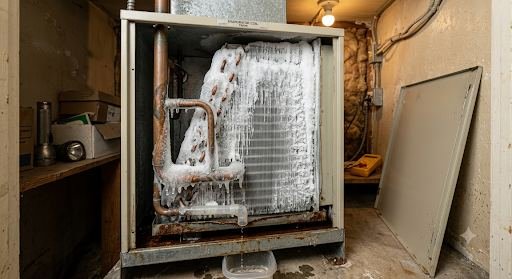
Frozen AC Coil: Causes and What to Do
Quick Facts
- Is this an emergency?
- Not dangerous, but stop running the system
- First step
- Thermostat to Off, fan to On (not heat pump defrost)
- Thaw time
- One to several hours depending on ice buildup
- Can you DIY it?
- Thawing yes — never chip ice, and confirm the root cause with a pro
Seeing ice form on an air conditioner during a heat wave feels backwards, but a frozen evaporator coil is a genuine malfunction, not the system working extra hard. The coil is supposed to stay cold enough to pull heat and moisture from indoor air, not so cold that ice actually forms on it — and once it does, the system's ability to cool your home drops sharply.
Why It Happens: Restricted Airflow Is the Root Cause Most Often
The evaporator coil needs a steady flow of warm indoor air passing over it to work correctly. When that airflow is restricted, the coil gets too cold and moisture in the air freezes directly onto it rather than just condensing normally. Common airflow restrictions include a dirty air filter, closed or blocked vents and registers, furniture or rugs covering floor registers, a dirty coil itself accumulating dust and grime over time, or a failing blower fan not moving enough air.
The Other Major Cause: Low Refrigerant
Refrigerant levels are precisely calibrated during installation. Even a small loss from a leak drops pressure in the coil, which lowers its temperature enough to freeze moisture even with normal airflow. If you've ruled out airflow issues and the coil still freezes, our refrigerant leak signs guide covers how to recognize this cause specifically.
A Less Common Cause: A Thermostat Issue
If coils are freezing specifically overnight rather than during the day, a malfunctioning thermostat that isn't telling the system to shut off as temperatures drop can be the cause — the system keeps running longer than it should for the actual cooling load, and the coil freezes from extended operation rather than airflow or refrigerant problems.
What to Do Right Now
Turn the system off completely at the thermostat — switch from Cool to Off, not just lower the target temperature. If you have a heat pump, do not switch to defrost mode for a frozen indoor coil; defrost mode is for ice on the outdoor coil during heating season and doesn't apply here. Switch the fan setting to "on" rather than "auto" so it continues circulating room-temperature air across the coil, which speeds up thawing. Expect the process to take anywhere from one to several hours depending on how much ice built up.
Protect the Area While It Thaws
As the ice melts, water needs somewhere to go, and a large amount of ice can produce more water than the condensate drain and pan are designed to handle at once. Spread towels around the indoor unit as a precaution, since overflow at this stage is a real path to water damage, not just an inconvenience.
Never Chip Away at the Ice
It's tempting to speed things up by physically breaking the ice off, but this risks damaging the coil's delicate fins, turning a temporary freeze into a permanent repair. Let it thaw on its own with the fan running rather than intervening physically.
Why Running It Frozen Makes Things Worse
Continuing to run the system with a frozen coil forces the compressor to operate under conditions it isn't designed for, which can cause permanent compressor damage — the single most expensive component in the whole system. The short-term inconvenience of turning the AC off and waiting is trivial compared to that repair bill.
Preventing the Next Freeze
Change the filter every 1 to 3 months, keep all vents and registers clear of furniture and rugs, keep landscaping at least two feet from the outdoor unit for airflow, and schedule a professional tune-up each spring before cooling season starts in earnest. Most of what causes a frozen coil is preventable with these habits alone.
| Pattern | Likely cause | Call a pro? |
|---|---|---|
| Freezes during the day, dirty filter | Restricted airflow | Change filter, monitor — call if it recurs |
| Freezes overnight specifically | Thermostat not shutting system off | Yes |
| Freezes despite clean filter/open vents | Low refrigerant / leak | Yes |
| Recurs repeatedly after thawing | Underlying cause not yet fixed | Yes |
This guide can help you thaw the coil safely and narrow down the likely cause — it can't confirm whether the underlying issue is airflow, refrigerant, or a thermostat fault without a technician's inspection. Thawing it is step one, not the actual fix.
Frequently Asked Questions
Will a frozen AC coil fix itself?
The ice will thaw on its own once the system is off, but the underlying cause — airflow, refrigerant, or thermostat — won't resolve itself and the coil will likely freeze again without addressing it.
Can I speed up thawing with a hair dryer?
Yes, on a low or medium setting held about six inches from the coil, in addition to running the fan. Never use anything that could chip or scrape the ice directly.
Why shouldn't I switch to defrost mode on a heat pump?
Defrost mode is designed to clear ice from the outdoor coil during heating season — it doesn't apply to a frozen indoor coil during cooling season and won't help.
Is a frozen coil covered by warranty?
It depends on the cause — a manufacturer defect might be covered, but damage from a dirty filter or neglected maintenance typically isn't. Ask your technician once the cause is identified.
How much does fixing a frozen coil cost?
It depends entirely on the cause — a filter change costs almost nothing, while a refrigerant leak or coil replacement runs considerably more. See our HVAC cost guide for a fuller breakdown.