Refrigerant Leak Signs: What Homeowners Notice First
Quick Facts
- Is this an emergency?
- Not immediately dangerous, but shouldn't wait long
- Most reliable single sign
- Ice on the coil or lines during normal operation
- Can you DIY it?
- No — refrigerant work requires EPA certification
- First step
- Turn the system off, ventilate, call a technician
A refrigerant leak doesn't usually show up as one dramatic symptom — it's more often two or three smaller signs appearing around the same time, which is exactly why it gets missed or dismissed early on. Catching the pattern sooner rather than later matters, since a system running low on refrigerant works harder and can damage the compressor the longer it continues.
A Sweet or Chemical Smell
Refrigerant mixing with the oil that circulates through your system produces a faint sweet, chemical smell, often compared to acetone or nail polish remover. Because refrigerant is heavier than air, this smell tends to settle near the floor or in low areas rather than rising — so it's often noticed near the indoor unit or close to vents rather than throughout a whole room.
Hissing or Bubbling Sounds
Refrigerant is held under real pressure inside your system. When it escapes through even a small crack or hole, that pressure often produces a faint hissing sound near the indoor unit, the outdoor unit, or the refrigerant lines connecting them. A larger leak can produce a bubbling sound as refrigerant mixes with system oil.
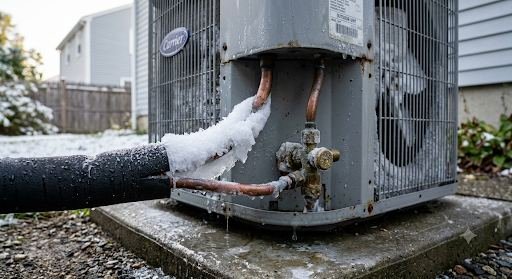
Ice on the Coils or Lines
This one is counterintuitive: low refrigerant causes pressure inside the coil to drop, which can bring the coil's temperature below freezing even while the rest of the system runs normally. Moisture in the air then freezes on contact, forming visible ice on the evaporator coil or the copper refrigerant lines — ice on a running AC system in the middle of summer is one of the more reliable individual signs of a leak.
Warm Air and Longer Cooling Cycles
A system low on refrigerant simply can't absorb and move heat as effectively, so it runs longer to reach the same thermostat setting, and sometimes doesn't fully reach it at all. If your AC feels like it's "almost" cooling but never quite catching up, refrigerant level is a reasonable early suspicion.
A Real Jump in Your Energy Bill
A system compensating for low refrigerant by running longer uses more electricity to do the same job. A jump of 20% or more compared to the same month the previous year, without an obvious explanation like extra guests or a heat wave, is worth connecting to the other signs above rather than treating as a separate mystery.
Signs That Look Similar but Aren't a Refrigerant Leak
Ice on the coil and warm air also show up with a simply dirty air filter or a blocked outdoor unit — airflow problems that have nothing to do with refrigerant level. The distinguishing signs specifically pointing to refrigerant rather than airflow are the sweet chemical smell and any hissing or bubbling sound, since a filter or airflow issue produces neither of those on its own. Checking the filter first, as covered in our AC not cooling guide, is a reasonable step before assuming refrigerant is the cause.
Why This Isn't a DIY Fix
Refrigerant handling requires EPA certification and specialized recovery equipment — it isn't legal or safe for a homeowner to top off or recharge a system directly. Beyond the regulatory side, refrigerant exposure can cause dizziness, headaches, nausea, and respiratory irritation with prolonged exposure, which is part of why a suspected leak calls for ventilating the area and calling a technician rather than investigating further yourself.
Where Leaks Actually Happen Most Often
Refrigerant lines and coils are joined by connections and fittings, and those joints — along with the evaporator and condenser coils themselves, where corrosion and vibration over years of operation take a toll — account for the large majority of real-world leaks. A system that's older or hasn't been serviced in years is statistically more likely to develop a leak at one of these points than a newer, well-maintained one, which is part of why age is worth mentioning on the call.
How a Technician Actually Finds and Fixes It
Rather than guessing, a technician typically uses an electronic leak detector or a UV dye added to the system that shows up under a specialized light at the actual leak point. Once located, small leaks at a fitting can sometimes be resealed; a leak in the coil itself more often means replacing that component rather than patching it. After the repair, the system gets evacuated and recharged with the correct refrigerant type and amount — not just "topped off," which doesn't address whatever caused the loss in the first place.
What to Do the Moment You Suspect a Leak
Turn the system off rather than continuing to run it — running a system low on refrigerant longer than necessary increases the risk of compressor damage, which turns a refrigerant repair into a full compressor or system replacement. Ventilate the area if the smell is noticeable, and call a licensed HVAC technician to confirm the leak location and handle the repair and recharge properly.
Sources: Mr. HVAC, Julian Heat & Air.
| Sign | What it suggests | Act now? |
|---|---|---|
| Sweet/chemical smell near unit | Refrigerant mixing with system oil | Ventilate and call soon |
| Hissing or bubbling sound | Active pressurized leak | Turn off system, call promptly |
| Ice on coil or lines | Low refrigerant dropping coil pressure/temp | Turn off system, call promptly |
| 20%+ higher energy bill, no clear cause | System compensating for reduced efficiency | Worth a diagnostic call |
This guide can help you recognize the pattern of a likely refrigerant leak — it can't confirm one, locate it, or tell you how much refrigerant has actually been lost. That needs a technician with pressure gauges and a leak detector, not a homeowner's read of the symptoms alone.
Frequently Asked Questions
Is refrigerant dangerous to breathe?
Small amounts aren't typically harmful, but prolonged exposure can cause dizziness, headaches, nausea, and respiratory irritation — ventilate the area if you notice a strong smell.
Why does ice form on a coil when refrigerant is low, not high?
Low refrigerant reduces pressure in the coil, which can drop its temperature below freezing even while the rest of the system runs normally — moisture in the air then freezes directly on the coil or lines.
Can I just add more refrigerant myself?
No — refrigerant handling requires EPA certification and specialized equipment. It's not a legal or safe DIY step, and it also doesn't fix the underlying leak.
Will a refrigerant leak get worse if I keep running the AC?
Yes, in the sense that continuing to run a system low on refrigerant increases strain on the compressor, which risks turning a refrigerant repair into a full compressor replacement.
How much does fixing a refrigerant leak cost?
It depends on how hard the leak is to locate and how much refrigerant needs to be recharged — see our HVAC repair cost guide for a fuller breakdown by problem type.