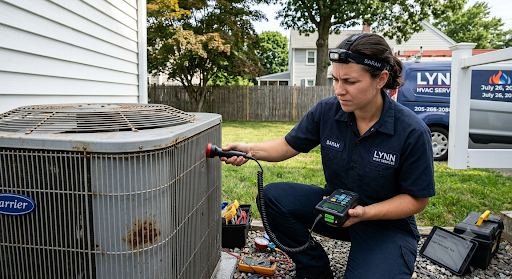
AC Making a Loud Noise: What Different Sounds Mean
Quick Facts
- Is this an emergency?
- Depends on the sound — some mean shut it off now
- Turn off immediately for
- Banging, grinding, or compressor screeching
- Typical blower/fan repair cost
- $100–$550
- Typical compressor replacement cost
- Around $1,200 or more
A normal AC makes a soft whoosh of moving air and a low, steady hum from the outdoor unit — nothing dramatic. When that changes to banging, squealing, grinding, or buzzing, the specific sound is actually useful information, not just background noise to tune out. Each points toward a different component, and a couple of them mean turn the system off right now rather than waiting for a scheduled visit.
Banging or Knocking
This usually means something has come loose inside the compressor or blower assembly — a connecting rod, a loose part, or in worse cases a failing internal component. Banging tends to get louder over time rather than resolve on its own, and it's one of the sounds worth shutting the system off for and scheduling a repair rather than continuing to run it.
Squealing or Screeching
Most often this comes from worn or dry fan motor bearings, or on older belt-driven units, a slipping or worn fan belt. A high-pitched squeal specifically from the compressor area can indicate dangerously high internal pressure — if you suspect that's the source, turn the unit off and call rather than waiting to see if it stops.
Grinding
Grinding is a harsher, often slower sound than squealing, and it typically means motor bearings have failed enough that metal is contacting metal directly. This is a turn-it-off-now sound in almost every case — continuing to run a grinding motor risks turning a bearing replacement into a full motor replacement.
Hissing or Bubbling
This points to a refrigerant leak, particularly if it's coming from the outdoor unit or the refrigerant lines themselves. A bubbling sound specifically suggests refrigerant mixing with system oil, often meaning a larger leak than a simple hiss. Our refrigerant leak signs guide covers this symptom cluster in more depth.
Buzzing
Location matters a lot here. Buzzing from the outdoor unit often means loose parts or debris caught in the fan. Buzzing from the electrical panel or disconnect switch is a more serious electrical warning sign and shouldn't be left alone — electrical failures are a genuine house fire risk. A low buzzing or humming from the indoor air handler can point to a failing capacitor or motor winding issue.
Clicking
A single click at startup or shutdown is completely normal — that's the control board signaling the contactor. Continuous or repeated clicking while the system is running or trying to start is different, and usually means a failing relay or a control board struggling to communicate with the compressor.
Older vs. Newer Systems
Belt-driven blowers, more common in older systems, add belt slippage and wear as an additional squealing source that newer direct-drive motors don't have. That doesn't make newer systems silent — they still develop motor bearing issues over time — but it does mean a squeal from an older unit has one more plausible cause worth checking (belt tension and condition) before assuming it's strictly a bearing problem.
Preventing Noise-Related Breakdowns
Most of what causes these sounds develops gradually: bearings lose lubrication, debris accumulates, connections loosen from normal vibration over months or years. A seasonal maintenance visit that includes bearing lubrication and a general inspection catches a real share of this before it becomes an audible problem, let alone an emergency one — noises are frequently the system's way of surfacing something that's been building quietly for a while.
What to Do Right Now, Regardless of Which Sound
For banging, grinding, or a screeching sound you believe is coming from the compressor, turn the system off immediately and call for service — continuing to run it risks turning an affordable repair into a full component replacement. For squealing, buzzing, or hissing that isn't accompanied by a burning smell, it's reasonable to schedule a repair without necessarily shutting the system down first, though turning it off is never the wrong call if you're unsure.
| Sound | Likely source | Turn off now? |
|---|---|---|
| Banging/knocking | Loose or broken compressor/blower part | Yes |
| Squealing/screeching | Belt or motor bearing wear | Yes if from compressor |
| Grinding | Motor bearing failure, metal-on-metal | Yes |
| Hissing/bubbling | Refrigerant leak | Reasonable to, not always required |
| Buzzing (electrical panel) | Electrical fault — fire risk | Yes, and call promptly |
This guide can help you narrow down the likely source of a sound — it can't confirm exactly which component has failed or how far the damage has progressed. Two different problems can sound similar to an untrained ear, which is exactly what a technician's diagnostic visit is for.
Frequently Asked Questions
Is it ever okay to keep running an AC that's making a new noise?
For a mild buzz or hum that isn't from the electrical panel, it's reasonable to schedule rather than shut down immediately. For banging, grinding, or suspected compressor screeching, turning it off is the safer choice.
Why does buzzing location matter so much?
Buzzing from the outdoor unit is often mechanical (loose parts, debris) while buzzing from the electrical panel is a genuine fire-risk warning sign. The same word describes very different levels of urgency depending on where it's coming from.
Can a squealing noise really damage my compressor?
Yes, if the squeal is from the compressor itself due to high internal pressure — continuing to run it in that state risks accelerating damage to a very expensive component.
Is clicking always something to worry about?
No — a single click at startup or shutoff is completely normal. Continuous or repeated clicking while running is the version worth investigating.
How much does it cost to fix a noisy AC?
It ranges widely by cause — blower and fan repairs often run $100–$550, while a full compressor replacement can run around $1,200 or more. See our HVAC cost guide for a fuller breakdown.